Blog
ZeroSbatti
The Tonnara di Marzamemi: a thousand years of history between sea and stone
How a former tuna fishing port became one of the most fascinating places in south-east Sicily
Before the tourists, before the restaurants, before the village even existed, there was tuna. And there were men who built their entire lives around catching it. That is the story the Tonnara di Marzamemi tells. The story of a place that gave birth to a community, sustained it for centuries, then reinvented itself when the tuna stopped coming.
A harbour, some nets and a village that grows
It all begins around the year 1000, when Arab settlers sail along the south-east coast of Sicily. They come across a natural harbour, well sheltered from the wind, perfectly positioned along the route that bluefin tuna follow every year during their migration.
So they settle there and set up a system as simple as it is ingenious: a labyrinth of fixed nets, anchored to the seabed, that the tuna swim into with no way back out. This is what is known as a tonnara.
The most productive port in eastern Sicily
That small fishing port quickly becomes the most productive in the whole of eastern Sicily. And around it, quite naturally, a community takes shape. Fishing families, craftsmen, workers. All tied to the tuna, all dependent on the tonnara.
The very name of the village still carries that origin: Marzamemi is thought to come from the Arabic marsà al-hamām, roughly translated as "the harbour of the turtle doves".
The golden age of the tonnara
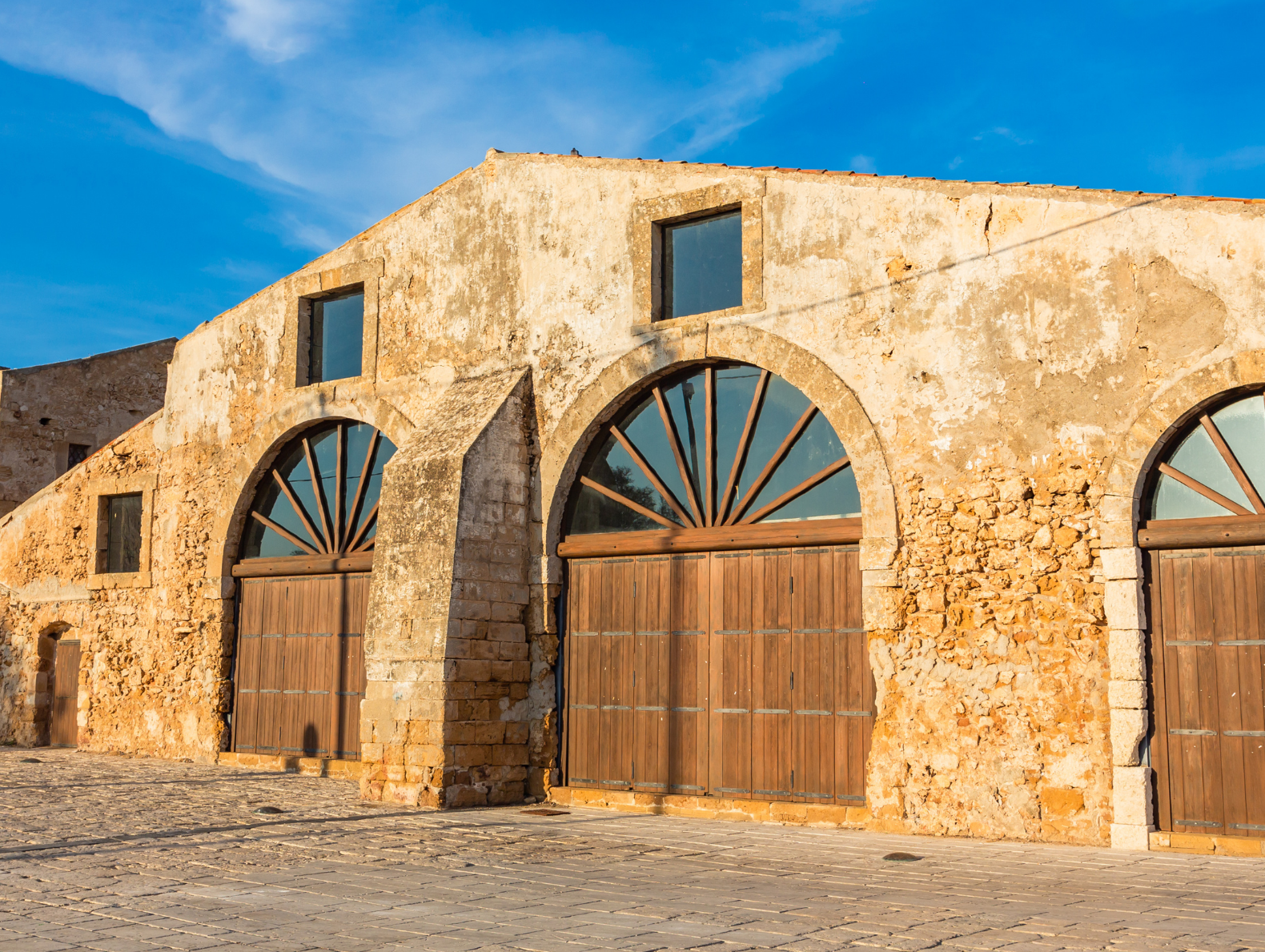
While the port has existed since Arab times, it is in the 18th century that the tonnara truly flourishes. In 1752, Prince Nicolaci di Villadorata invests heavily in the site. He expands the harbour facilities, builds the Loggia degli Scieri, a vast boathouse designed to shelter the large fishing vessels, and develops an entire complex around the tuna trade.
At its peak, the tonnara employs around forty men year-round: sailors, guards and caulkers tasked with maintaining the boats. Each season, an average of 2,000 bluefin tuna are caught, and the year 1904 will be remembered for a record of over 4,300 in a single season.
The mattanza: the ritual that set the rhythm
But beyond the numbers, what truly defined life at the port was the mattanza. The word literally means "the killing", and it refers to the moment when the tuna trapped in the final chamber of nets were hauled to the surface.
The rais, the head fisherman, directed the entire operation from his boat, while the tonnaroti accompanied every move with traditional chants. It was brutal and solemn at the same time, and the whole village would come to watch from the shore.
This ritual, repeated twice a day during the fishing weeks, set the pace for all of local life. The working days, the feast days, the earnings for the year.
The end of an era
Then industrialisation arrived. Motor boats, trawlers and modern techniques gradually made traditional tonnare obsolete. Keeping dozens of men, kilometres of nets and wooden boats was becoming more expensive by the year, while the catches grew smaller and smaller.
A slow decline
In Marzamemi, the decline sets in as early as the 1920s. The cannery, which processed the tuna on site, closes in 1926. Then in 1943, a British bombing raid damages part of the harbour's structures.
After the war, activity resumes nonetheless, because in a Sicily that is still desperately poor, the tonnara remains one of the few ways for local families to make a living. But the respite does not last. By the late 1960s, the nets are no longer cast. After nearly a thousand years of activity, the fishing port falls silent.
A second life
What is remarkable is that the tonnara was not abandoned. Over the years, its buildings have been restored and repurposed, while preserving their original structure.
The Palazzo Villadorata
The prince's former palace, which once served as the nerve centre of the entire fishing operation, now hosts cultural events in its large inner courtyard. Its terrace, from which the work of the fishermen was once overseen, still looks out over the harbour and the sea.
The Loggia degli Scieri
This is perhaps the most striking transformation. This raw 750 m² boathouse, originally built for the sole purpose of storing fishing vessels, has become a venue for exhibitions, concerts and festivals. Some of the original boats are still kept inside, a quiet reminder of what this space was used for not so long ago.
A living place, all year round
Every summer, the tonnara comes alive through events such as the Marzamemi Film Festival, the Festival Artieri dedicated to crafts and the arts, and creative markets that take over the old working spaces.
And throughout the year, the Palazzo and the Loggia also serve as a setting for weddings. It is easy to see why: the golden stone, the harbour just below, the late afternoon light on the sea. It is hard to think of a more authentic backdrop for that kind of occasion.
The walls have not changed. What happens inside them has.
A thousand years, and still standing
The Tonnara di Marzamemi is not a relic sealed behind glass. It is a place that has crossed a thousand years of history by reinventing itself at every turn. It saw the Arabs cast the first nets, a prince build an empire around bluefin tuna, generations of fishermen devote their lives to it, and then silence settle in when the sea was no longer enough.
And yet it is still here. Transformed, alive, rooted in the present as much as in its past.